 Romans in Milan? No problem! Just make sure you’re prepared for the cold (fur hats and thick coats), and if in doubt, ask the traffic cops (“noio volevan savuar…” – read caption of B&W picture below*). Here in the north, the climate is different—try explaining that to the African heat wave that’s engulfed Europe these past few days: it’s practically melting…
Joking aside, a week-long trip to Milan got me thinking about a number of things. From how much I enjoy this city, despite being a Roman of Samnite origins (i.e. a ‘southerner’), to how I generally find the Milanese quite likeable (though it always depends on the individual). Apart from the fact that when dealing with the public (and I’m told this is the case in Naples too), you find a level of courtesy that’s increasingly rare in Rome (though perhaps things are improving), it’s still a major Italian city (albeit far smaller than Rome), and as such, it’s splendid in the city centre but has the usual problems in the suburbs. Specifically, I was at the Politecnico di Milano, not for work but to accompany my teenage son to a summer course offered by the prestigious institute named after Leonardo da Vinci. It was the second time: last year it was just the two of us (a wonderful father-son trip) and this year the whole family came along. As was the case last year, I had to carry on working remotely. This year my wife was able to come, but she had to go sightseeing on her own. Working within a university provided me with my first opportunity for reflection.
 There’s a saying in Italy that goes almost like “If you miss the train, it’s gone”. Maybe the closest English variant is “Opportunity only knocks once”. Both mean that in life you basically only get one shot. Sometimes I find myself dwelling unnecessarily on certain choices I made in the past that influenced my geological career, and ten years after leaving the field, I still sometimes reflect on this. It’s pointless because you can’t change the past, and if things are the way they are today, there must be a reason for it, and there’s nothing you can do about it. At most, one can reflect on the choices made in order to provide guidance to our children and, why not, understand that perhaps there are no right or wrong choices, only different ones, choices that have led to different outcomes. We can play at imagining how things would have turned out, what results different choices would have led to. We can, but how useful is that? I’m not sure, but here I am, ten years after the “debacle,” reflecting on how, in the end, I can’t complain too much…

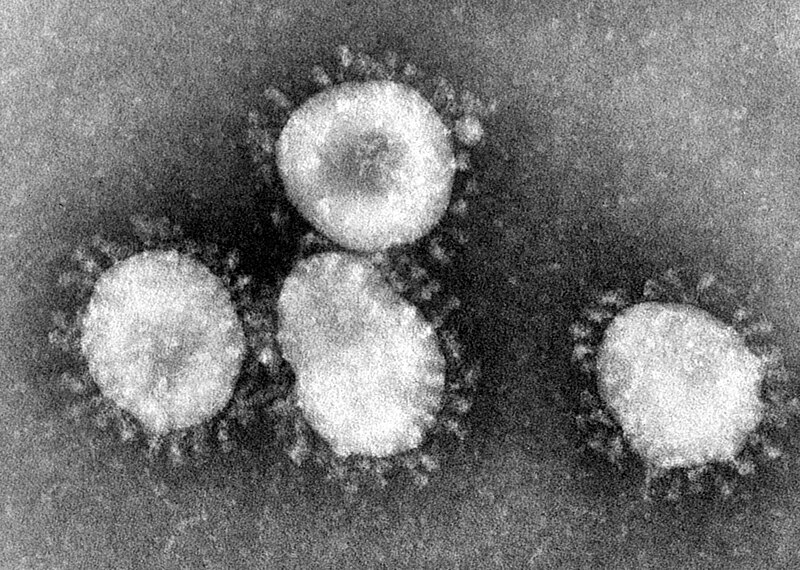 The word virus comes from the Latin term for poison. I mean, that’s not a good start. Most people don’t believe that viruses are a life form. In biology, living things are divided into 5 kingdoms: bacteria, protists, fungi, plants, animals. Viruses are not included because they lack a fundamental characteristic of living beings: the ability to reproduce by themselves. Put a virus on a table and don’t let it get in contact with anyone and it stays there without moving or changing. But in contact with the right cell, there it “animates”, reproduces and spreads. Then it can be trouble. But the luck lies in the fact that viruses are extremely specialized: a given virus only attacks certain types of cells of certain living beings. And it can also be useful to human beings…