Digital and guitar – not for me

Guitar effects pedals pile on Craiyon

On this website, you can find comparisons between digital and analog formats in both the Hi-Fi and Photography sections. Recently, I found myself facing this same dilemma when it comes to the guitar. Digital technology and computing are, of course, taking over every field. Even in cars (another section of this site), where screen size now counts more among the features to advertise than the type of suspension (and yet using your cell phone is prohibited). Generally, digital technology is supposed to simplify things for us, come to our aid, and allow us to do things we couldn’t do before. It used to be impossible for someone to call us while we were out and about. Are you sure it’s better today to receive work calls—or worse, aggressive marketing calls—no matter where we are? Sure, it’s nice to be able to call in an emergency; sometimes it’s vital. But in general, without discounting the life-saving cases, digital technology rushes us, overwhelms us with choices, and ends up making us enjoy things less (think choosing a movie or series on a streaming platform). And what about the guitar?

Continue reading  

Tube scream or not tube scream…?

That is the question!
My love-hate relationship with the famous green pedal…

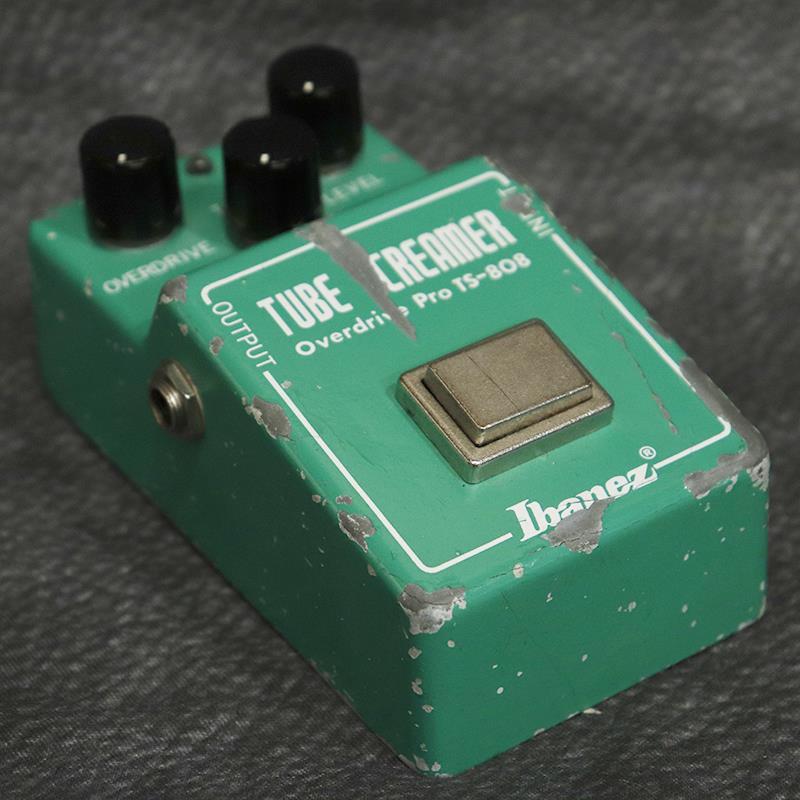
It took me a while to appreciate it, but I finally got there. That’s normal—there are legions of fans and critics of the Tube Screamer, the iconic pedal created by Ibanez in 1979 and made famous by countless professionals and guitar stars. Like most guitar effects, its effectiveness depends (heavily) on the amplifier. A pedal like the Tube Screamer can sound amazing on some amps and terrible on others. And that can be misleading, making you think the pedal is the problem. Instead, it’s all about pairing. In fact, in my ignorance, I initially found myself among the detractors, but then something changed…

Continue reading  

How could this happen?

If I were to describe my journey as a guitarist (obviously a very amateur one, of course), I would have to start with my youthful passion for the Italian band The Pooh. Yes, The Pooh, that’s right., the name comes from the famous cartoon… But what do the Pooh have in common with blues-rock, with Hendrix, Clapton, and the likes of John Mayer, which I am currently covering? How did I go from Italian melodies to playing the John Mayer Trio’s production? Well, it may seem surprising at first glance, but there is a connection. First of all, it should be emphasized that these are four musicians of the highest caliber. One might think, okay, you’ve grown up and your tastes have changed. But that’s not really the case. It may seem strange, but there is a consistency, a logical thread that can be found…

Continue reading  

Now I’ve got to step on it…

Between the end of 2025 and the beginning of 2026, for various reasons, I found myself forced to bring only three pedals and a power supply to the rehearsal room. It wasn’t bad at all to travel so light. As I get older, I’m happy to carry less weight. For a while, I had to do this due to circumstances beyond my control, but I rediscovered the pleasure of having a couple of overdrives and a delay, and that’s it; and managing everything with the volume of the guitar. Of course, you also need a good amplifier, and I don’t have one in the rehearsal room. But it got me thinking. Why not simplify everything and keep it light, both in terms of weight and electrical signal, to manage? Continue reading  

My two Strats…

The two sisters? Or perhaps cousins? Second cousins? Perhaps it would be better to say foster sisters…

Well, yes, because they are not two Fenders. One is handmade in Italy, the other, the Fender, is made in Mexico. And they are, at least in appearance, emblematic of Fender’s golden years, roughly from the mid-1950s to the mid-1960s. They are not really vintage, at least the Fender isn’t: it would be impossible for me to buy one, the prices are absurd. But it is a reproduction (from 2006) of how Stratocasters were built 60 years earlier at Fender in California. They have the specifications of the first Stratocasters, and even the color is very typical of that era, very 1950s, even though the painting technique was quite different. The foster cousin, on the other hand, has the typical appearance and most common color of the 1960s Stratocasters; then Fender was sold to CBS and things changed. But this guitar is perhaps closer to the real Fenders of the time, even if it has a completely different history.

Continue reading  

A guitar for my 60s

Non so come sia potuto succedere ma anche io sono arrivato in un battibaleno a 60 anni. Fa impressione solo scriverlo qui. Una bella età, nel senso che gli anni non sono pochi e per certi versi si sente; per altri non mi sembra di averli davvero. Sarà che continuo a strimpellare allegramente? Penso di sì, anche per quello. E forse perché ancora alimento i sogni, il sale della vita. Fin da giovanissimo ho sempre sognato di avere una Fender Stratocaster. Come è accaduto per molti, il mio idolo chitarrista ne utilizzava una ed è così che ho conosciuto il celebre modello di chitarra elettrica nato in California negli anni 50. La prima Stratocaster che ho avuto è stata una imitazione piuttosto economica, regalatami a 15 anni dai miei genitori. È tuttora il regalo più bello che io abbia mai ricevuto. La prima chitarra non si scorda mai e, sebbene fosse ridotta male, costruita con materiali di bassa qualità, fatta eccezione per gli ottimi pick-up della Di Marzio, ne ho un ricordo affezionatissimo e maledico il giorno in cui l’ho data via.

Continue reading