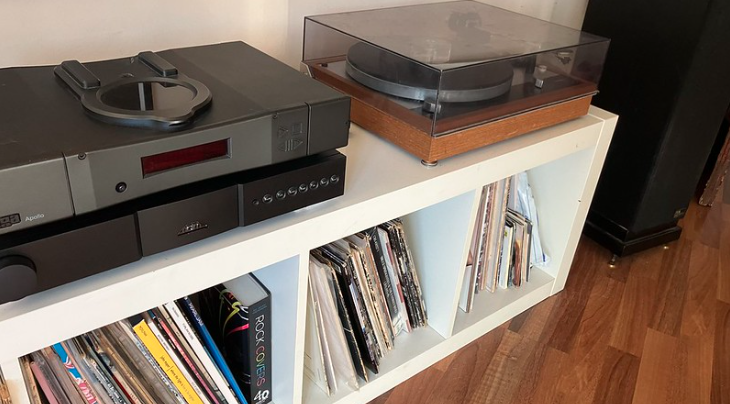
Today I can say I am completely satisfied with my system. Not that I hadn’t been before, but there had always been a bottleneck somewhere. It wasn’t just a feeling but an objective fact. At present, I believe that, apart from the age of some of the components, the system is balanced and sounds excellent. Of course, there’s always room for improvement, but at this stage it isn’t necessary because, in its current state and for its intended purpose, the system is excellent just as it is. The system centres on the TDL Studio 0.5 transmission line speakers. The speakers (together with the room) are the main factors determining a system’s sound. So it’s important to choose them carefully and know what you want to achieve. I knew this very well: back in 1991, I was convinced I wanted full-range speakers (not bookshelf speakers that cut off at 60 Hz – even though a musical signal rarely drops much lower than that). I wanted floorstanding speakers; after all, bookshelf speakers would have to be placed on stands, taking up exactly the same amount of space whilst being far less stable. The speakers shouldn’t have excelled in the bass whilst skimping on the rest of the spectrum. The TDLs were exceptional in the bass and excellent across the rest of the frequency range too. They were just right for me. Once the speakers were chosen, I then had to select an amplifier capable of driving them properly. But let’s analyse the specifications of my system component by component and see why, in any case, a further ‘upgrade’ – whilst technically possible – is not necessary.
Author: Pasquale Robustini
Twenty years of the Papalfa 2.0
TO BE TRANSLATED…
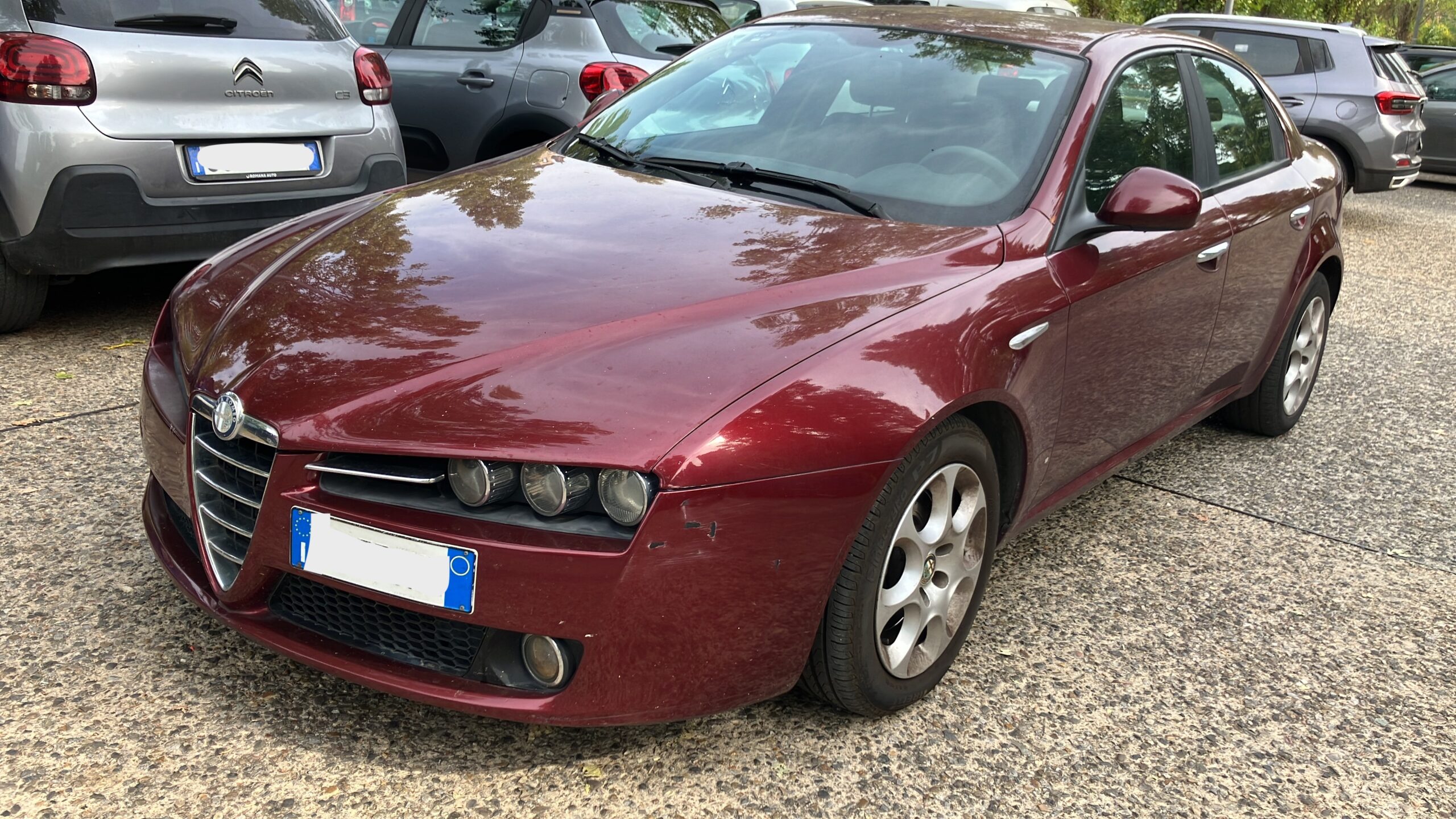
Papalfa is the affectionate name I gave to the first Alfa Romeo I bought, partly because I bought it just after my son was born, and partly because the arrival of the little one meant I needed a slightly bigger car. The first Papalfa was the splendid black Alfa 156 Sportwagon. A car that reignited the passion of Alfa enthusiasts following the disappointment of the Fiat takeover. In my case, it was the car that rekindled my long-standing passion for the make. I owned the Papalfa for 12 years, taking me through the best and worst periods of my life, and it was still with me during my recovery. It came to the end of its life after around 400,000 km, but only because the bodywork had sustained irreparable damage. You grow attached to a car that’s been through thick and thin with you. And the plan was to move on to a Papalfa 2.0. At the time I couldn’t afford it, but I came across an unmissable opportunity and settled for a Fiat Bravo (it reminded me of my old love for the Ritmo Super or the 105TC), a car never properly appreciated by the public, yet truly excellent and practical. Then the chance arose and I came across the stunning ruby-red 159. Three years have passed…
Sounds matter

Just like words, sounds are important. I’ve always cared about them. Sound quality has been a ‘must’ for me ever since I discovered hi-fi. I’m not an expert audiophile, nor am I a sound technician or sound engineer. But I have developed a certain ear and a certain sensitivity to the quality of the sound source. I haven’t listened to a great many hi-fi components, nor have I tried out various guitar amplifiers or guitars themselves. But even so, if something’s not quite right, I can tell. Now, when it comes to the purity of an electric guitar’s sound, there’s plenty to discuss, given that we’re often using overdrive – that is, distortion – so a few things need clarifying. But the quality of the audio experience is important to me, yet I see that people are losing both the need for it and the ability to notice it. Even in the world of live music.
Compulsive Obsession
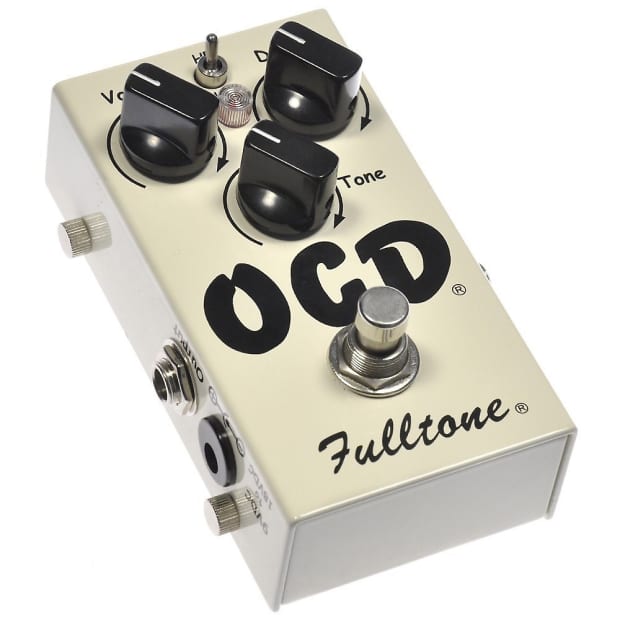
When you’re going through a particularly tough time in life, even simple objects can take on symbolic significance, serving as reminders of intense moments from the past. In my case, the hardest time was undoubtedly when I lost my job as a geologist. It coincided with my return to playing in a band. So, for me, getting back into playing, that very band I played with, and even the instruments I used are all symbols of that memory. Playing kept me afloat, it stopped me from losing my mind and, incidentally, it was also the means by which I found a new job later on, so there are certain things from that period that in some way symbolise my clinging on to hope and, ultimately, my recovery. Yes, even if it’s just a simple guitar effects pedal…
Where the light is
It was a rather dark period in my life. Dark clouds were gathering on the horizon; the company I worked for was about to close down and I didn’t know what to do. On a day just like any other, as I was trying not to despair and telling myself that things would work out, my wife cheered me up by showing me a video of an American guitarist playing in front of thousands of people with his band. I was struck by how young he was (the video was from 2007, almost 10 years earlier, and he was certainly young at the time) but above all by the way he played: very well, of course, but he played the guitar (a Stratocaster, no less) in the ‘old-school’ style. In short, you could tell he was inspired by the greats of the past – Hendrix, Clapton, Steve Ray Vaughan – but he was good because he also brought his own style to it. And he had a great voice too – a singer-guitarist who also plays remarkable solos, just like in the old days. I was pleased that there was still a young man who played the guitar in this way. Many of you will have realised that I was talking about John Mayer…
A Trip to the Cold North!
Romans in Milan? No problem! Just make sure you’re prepared for the cold (fur hats and thick coats), and if in doubt, ask the traffic cops (“noio volevan savuar…” – read caption of B&W picture below*). Here in the north, the climate is different—try explaining that to the African heat wave that’s engulfed Europe these past few days: it’s practically melting…
Joking aside, a week-long trip to Milan got me thinking about a number of things. From how much I enjoy this city, despite being a Roman of Samnite origins (i.e. a ‘southerner’), to how I generally find the Milanese quite likeable (though it always depends on the individual). Apart from the fact that when dealing with the public (and I’m told this is the case in Naples too), you find a level of courtesy that’s increasingly rare in Rome (though perhaps things are improving), it’s still a major Italian city (albeit far smaller than Rome), and as such, it’s splendid in the city centre but has the usual problems in the suburbs. Specifically, I was at the Politecnico di Milano, not for work but to accompany my teenage son to a summer course offered by the prestigious institute named after Leonardo da Vinci. It was the second time: last year it was just the two of us (a wonderful father-son trip) and this year the whole family came along. As was the case last year, I had to carry on working remotely. This year my wife was able to come, but she had to go sightseeing on her own. Working within a university provided me with my first opportunity for reflection.