After decommissioning my Oppo player, I felt nostalgic for the beautiful Cambridge Audio I had before (which, incidentally, is now hard to find and sells for much more than I sold it for). So I started looking for an old Cambridge Audio player to use as a reading mechanism, in memory of my old CD6. Nowadays, the even older CD4 is perhaps the most highly regarded, having been designed by the famous John Westlake, who later moved on to Audiolab. At the modest price I could afford, the CD5s were available, but they are still older than the CD6. Then I happened to read an excellent review in TNT-Audio, my magazine of choice, of the Cambridge Audio D500SE.
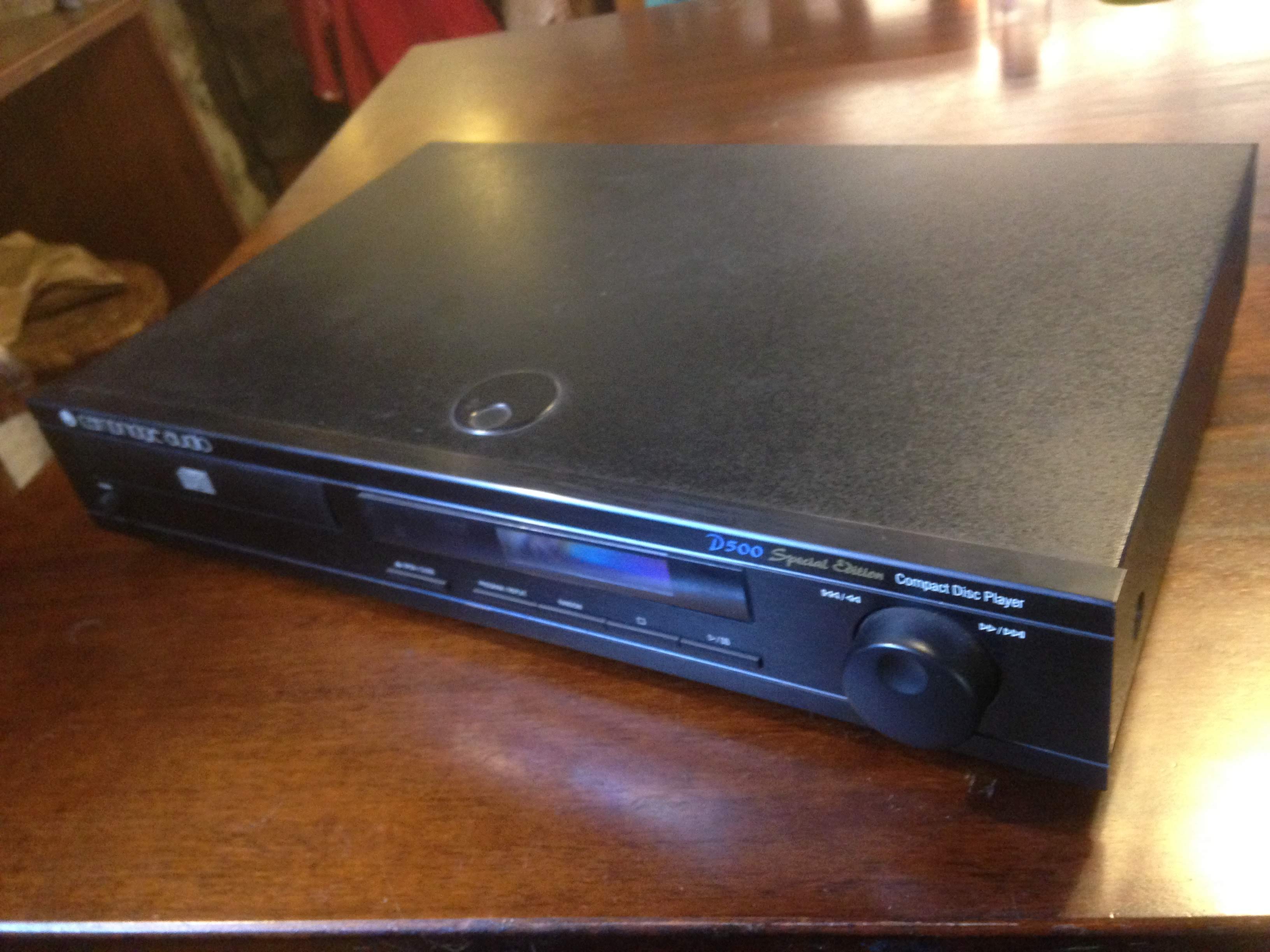
Cambridge Audio D500SE
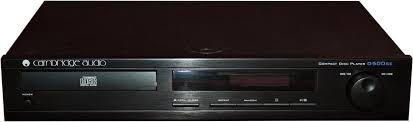
I first went for a D300SE at 50 euros shipping included. But it was shipped in just a cellophane wrap. It could not read CDs at all, no matter what I tried to solve the issue. I claimed my money back for the poor packaging and I found a more honest add about a D500SE whose outputs were silent but the digital ones were working fine. Same price, great packaging assured, so I went for it.
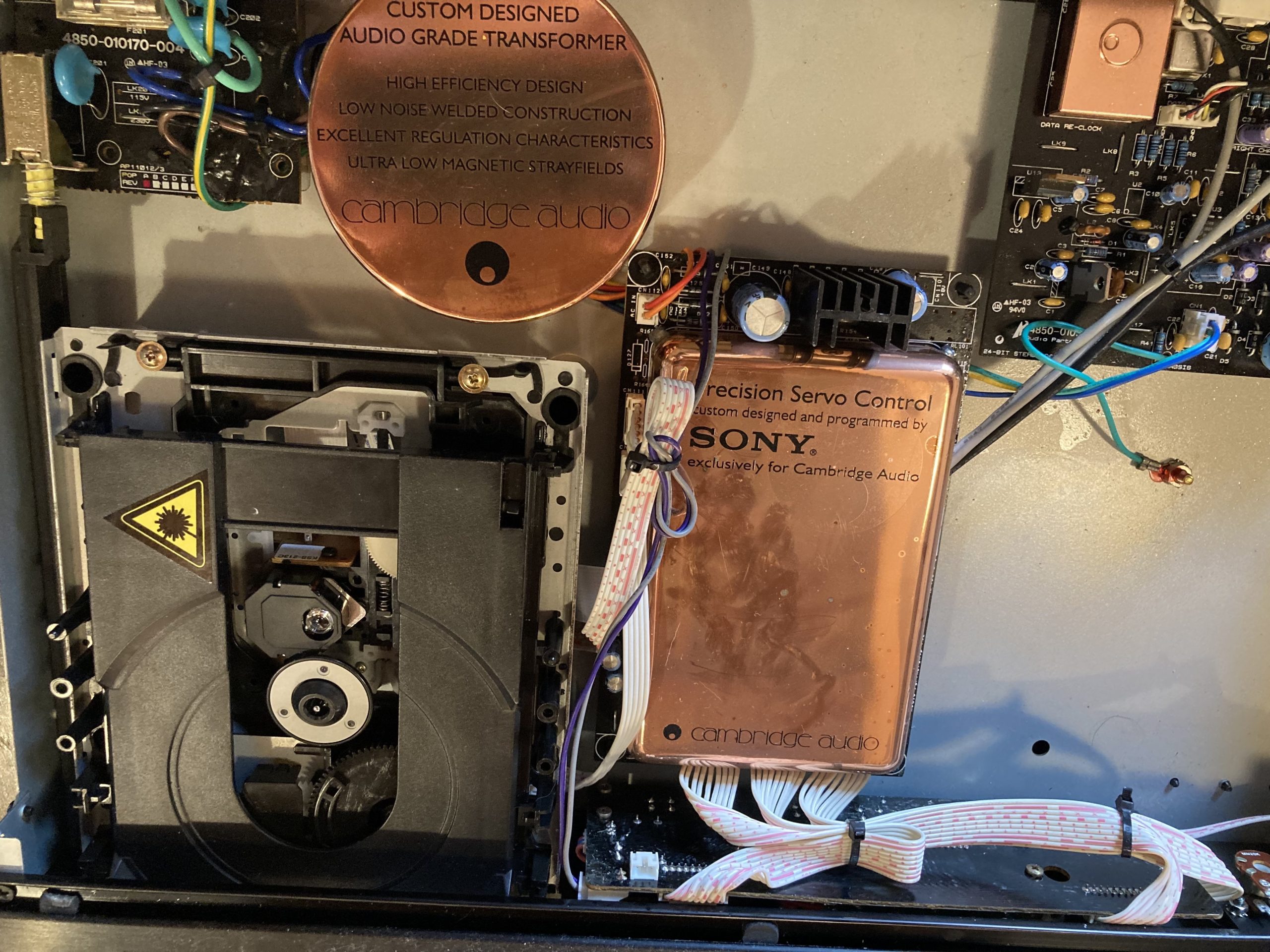
The finely assembled insides of the D500SE, with the highly visible toroidal transformer and servo mechanism exclusively designed by Sony for Cambridge Audio
In my current situation I couldn’t ask for more. If digital technology in 20 years has made great strides, no big deal, the D500SE seems to be an excellent dedicated transport Sony KSS 213c with specially designed servo mechanism. The player has BNC and Toslink digital outputs. The former is considered the best solution, superior even to RCA (optical is the worst standard, to be used only if there is no other choice). So I took a good RCA-BNC cable and connected the D500SE to my humble but honest Pro-Ject DacBox E.
In 2025, the lack of a remote control, the weak and poor display, and doubts about the condition of the mechanics prompted me to keep looking. In reality, I only need a CD transport, any modern Blu-ray player with digital output would do. But I don’t like them. Thinking back to my old CDs, the robustness of the Pioneer PD8500 is still a fond memory. It is rarely found second-hand and is overpriced. However, I found the PD-S series, also from the 1990s, interesting: Pioneer’s idea was to reverse the reading system and rotate the CD with the data side facing upwards, making it more stable and, in a sense, more similar to a record. I found a refurbished PD S603 in excellent condition (with remote control!) on eBay Germany. Unfortunately, it doesn’t have an SPDIF digital output, only an optical one, but never mind, I would have connected it to the DAC anyway…

An interlude – for a few months I used a nice Pioneer PD S603 with Stable Platter mechanics from the 90s; unfortunately, equipped with only an optical digital output, it lost out to the Cambridge, which has a coaxial BNC output.
What surprised me most was how the sound from the Pioneer’s analogue outputs was significantly better than that from the Toslink via the more modern ProJect DAC. I couldn’t believe my ears! A player from the 90s was outperforming a DAC from the 2000s! Okay, the ProJect is a cheap DAC… definitely the weak link in my system. So after some time, I finally found the right opportunity and bought a used Schiit Modius. The DAC, which received excellent reviews on my reference TNT-Audio, is definitely better!
With the new DAC, the situation was reversed: the Cambridge sounded clearly better from its coaxial BNC output. The Pioneer only had the optical output and sounded quite clearly less dynamic and defined (a sound quite similar to that of the Cambridge when also connected via Toslink – the limitations of the optical connection compared to the coaxial one became clear to me, mainly due to poorer jitter management).
So I became reacquainted with my D500SE and took it to a workshop for servicing. I bought an original remote control from England and a nice 75 ohm BNC-RCA cable from Mogami with gold-plated Canare connectors.
The future
Although very pleasant, the situation is not up there with the rest of the system, which could do better. It’s a bit of a historical deficiency in my system, given that I’ve preferred listening to vinyl for a few years now. But, as I said, the cost of records is bringing me back to CDs, so the system deserves better. What? A superior DAC? Or a more modern reading mechanism? After asking for advice from the usual excellent TNT-Audio, it was made clear to me that at this level it is better to go for an integrated solution, a dedicated CD player. Which one? The usual names are mentioned: Naim, Rega, Cyrus (not too old if second-hand). My Meridian dream is too risky for age reasons. The older a player is, the higher the risk of irreparable faults. This happened to me when I stumbled upon a beautiful Meridian 506.20 at a good price but with many disc reading problems (luckily, the return was accepted).

In 2025, I put a splendid Meridian 506.20 under the Christmas tree, but unfortunately I had to return it because it didn’t work…
In a world that was preparing to abandon the CD format, manufacturers of reading mechanisms and lasers (Sony and Philips above all) stopped investing and no longer supply spare parts for many models, so you need to check this first. Otherwise, there are some well-made new products, such as the Arcam CD5 Radia or various Rotel (CD11, CD14, CD1572) or Marantz (CD60 or CD 6007) models. But they are all inferior to the Naim, Rega and Cyrus models from a few years ago: Naim CD 5i, Rega Apollo/Saturn, Cyrus CD6/8. In the case of Naim, we are dealing with Philips VM1502 mechanisms (for some, it would be exactly the one better-known as CDM12.1), which are no longer produced, so there are third-party mechanisms that can be used without any problems. Rega uses Sanyo mechanisms, which are still in production. The three British brands now produce only a few models: Naim only the CD 5si, Rega the new Apollo Saturn MK3 and the very expensive Isis. Cyrus the excellent CDi and CD40. All of them are out of my price range. I have to go for second-hand (and also for something cheaper). Of the three options mentioned above, the cheapest is the Rega Apollo CD MK1, so it is the most likely to be added to my system in the near future. The original top-loading design of Rega CD players is very convenient because there are fewer motorised parts that can break, but it means you have to keep the player at the top of the chain or at least with enough space above it. However, its shape is reminiscent of the Starship Enterprise and seems like a tribute to Star Trek, which I find rather cool. 😉

The first Rega Apollo (mid-2000s) is one of the CD players I am considering adding to my system in the future.
After all, it is a CD player produced by those who have made it their mission to extract the best music from vinyl: Rega waited quite a while before pulling its digital player (the Planet) out of its hat, and when it did, it was a huge success because it didn’t sound as “digital” as the players of the past. The Apollo is its evolution, and the Saturn that followed (identical externally) was its ultimate expression (but I don’t think it’s within my budget). There are a lot of complaints online about Rega CD players malfunctioning, with people advising against them and saying they’ve stopped buying them for this reason (even though they’re sorry because they sound wonderful). Well, I guess satisfied buyers don’t bother to start discussions on forums, and TNT-Audio continues to recommend them when appropriate. After all, I’m the one talking, and I have a player from 2000 that still works very well… The old Planet players may be a greater risk because they have old Sony mechanisms (the same as my Cambridge player) that are no longer available and cannot be replaced with anything else! And maybe they have a slightly old-fashioned sound (high frequency roll-off). Modern players all tend to be bright, so for me, a CD player that is not too old but of a certain pedigree would be ideal…
The presence of a beautiful Naim amplifier would tend to pair it with a CD player from the same manufacturer, but this is not mandatory and they are usually more expensive. A Rega CD player may well be able to soften the detail-oriented tendency of the Naim amplifier. Although, to be honest, Rega players can also extract a lot of detail, but they are also famous for producing a beautiful, wide soundstage, more so than Naim players (therefore, they could balance each other out and that’s why they are often paired together). We shall see…