TO BE TRANSLATED…
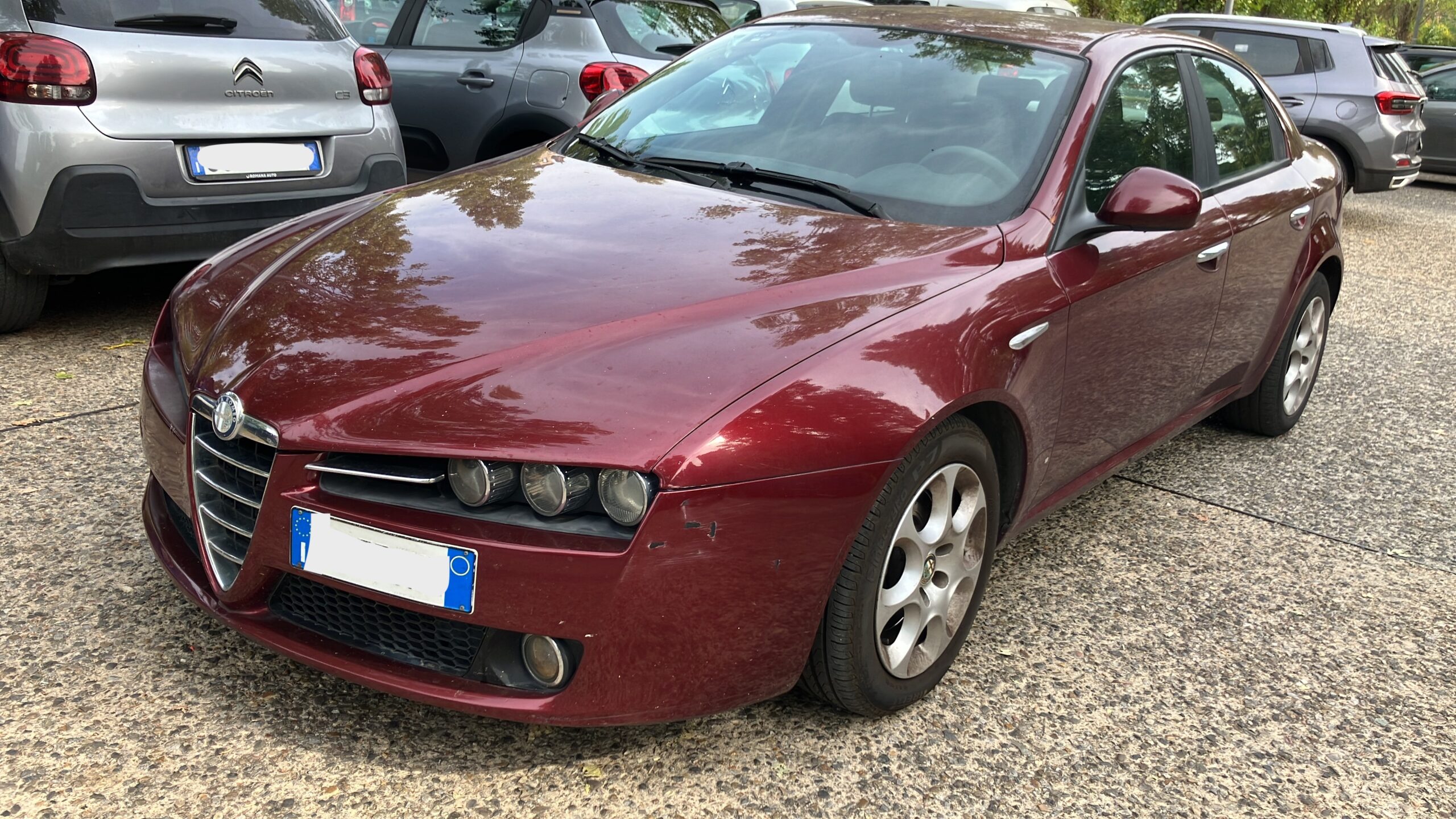
Papalfa is the affectionate name I gave to the first Alfa Romeo I bought, partly because I bought it just after my son was born, and partly because the arrival of the little one meant I needed a slightly bigger car. The first Papalfa was the splendid black Alfa 156 Sportwagon. A car that reignited the passion of Alfa enthusiasts following the disappointment of the Fiat takeover. In my case, it was the car that rekindled my long-standing passion for the make. I owned the Papalfa for 12 years, taking me through the best and worst periods of my life, and it was still with me during my recovery. It came to the end of its life after around 400,000 km, but only because the bodywork had sustained irreparable damage. You grow attached to a car that’s been through thick and thin with you. And the plan was to move on to a Papalfa 2.0. At the time I couldn’t afford it, but I came across an unmissable opportunity and settled for a Fiat Bravo (it reminded me of my old love for the Ritmo Super or the 105TC), a car never properly appreciated by the public, yet truly excellent and practical. Then the chance arose and I came across the stunning ruby-red 159. Three years have passed…
With my first Papalfa – as a result of my son’s games – I happened to have a bracelet bearing the Batman symbol wrapped round the gear-lever cuff. That might well have made it a credible Batmobile, black and aggressive as it was ;-). But as I’d grown up reading more Marvel comics than DC ones, I eventually associated it with the Black Panther. Then, three years ago, when I found myself behind the wheel of a red Alfa, it came naturally to me to link it to the Marvel hero Daredevil – my favourite, with his scarlet red costume (not ruby red, but never mind). So, if the first Papalfa was my Black Panther, Papalfa 2.0 would be the Red Devil!
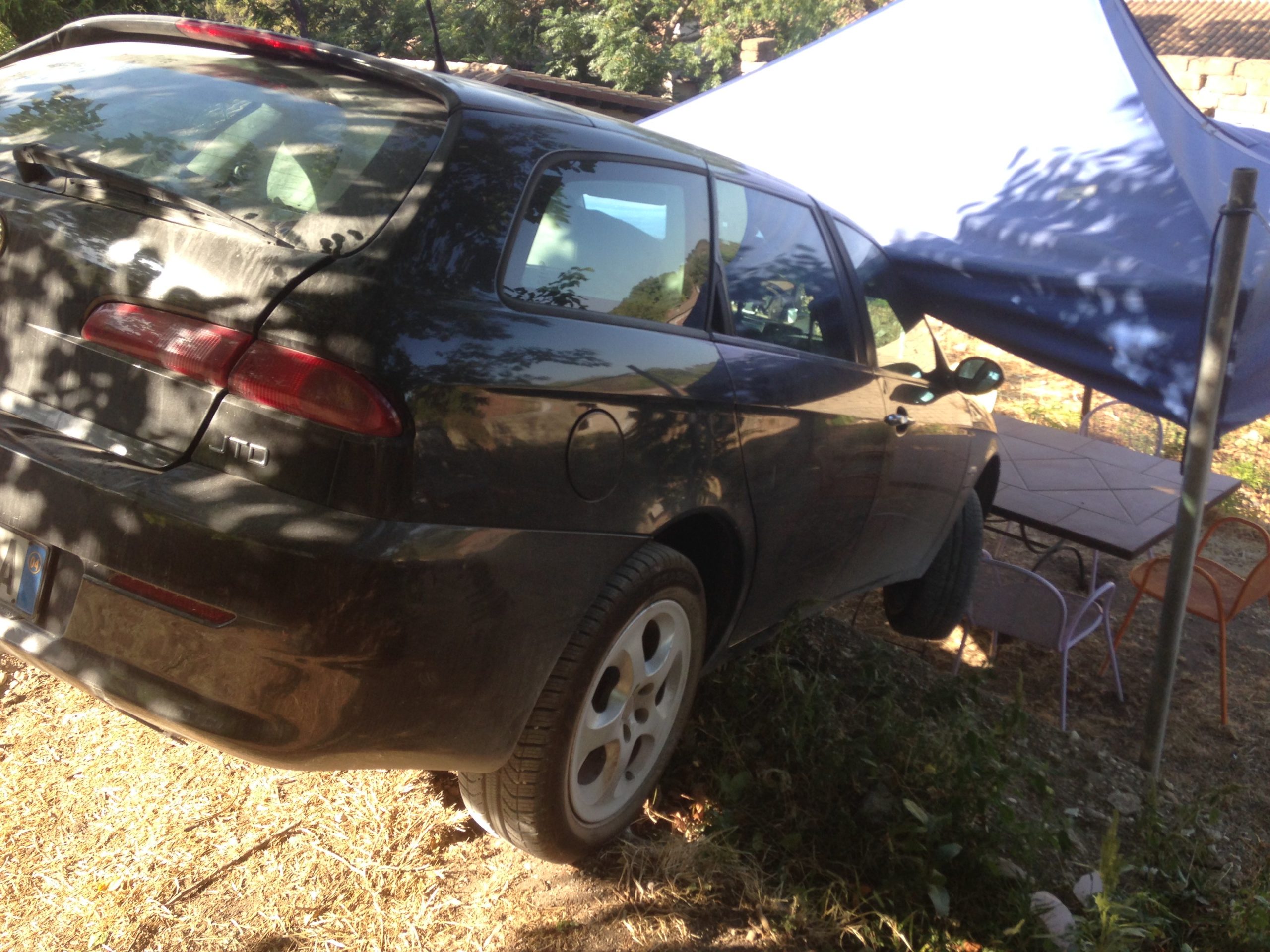 The beginning of the end for the magnificent Papalfa 1… it held out for quite a while longer, but a botched windscreen replacement led to rust forming, which spread inexorably…
And although it may seem strange, the 159 – considered clunky and heavy – performs better than the 156 I had before. The 156 had been successful on the racetrack; the 159 never competed, as Alfa Romeo was no longer racing. The 159 was therefore not derived from a racing model like its predecessors. It was developed directly from a platform with the grand-sounding name ‘Premium’, intended for flagship and touring cars, and designed in collaboration with GM. GM then pulled out, selling its stake to Fiat. This meant that the 159 had the Premium platform dedicated solely to it and the splendid Brera. And with that money, Alfa Romeo was able to invest in the spectacular Giorgio platform, from which the Giulia and Stelvio were later born. For the 159, Fiat had to cut costs by shortening the ‘Premium’ platform as much as possible and retaining the much-maligned engines – already manufactured in Adelaide, Australia, by GM – whilst fitting them with an Alfa Romeo cylinder head, which was never quite enough to win them over with Alfa enthusiasts. The upshot: the Alfa 159 boasts a highly respectable chassis, born from a unique platform used exclusively for it (something unthinkable today, when a single platform is used to produce chassis for all the group’s brands). But cost-cutting meant that the beautiful 159/Brera could not be fitted with engines adequate for its weight, apart from the (hated) 2.2 and 3.2 petrol engines and the legendary 1.9 Mjet diesel – but only in the 150 cv version (mine) – or even the powerful but complicated 2.4 Mjet. Then it was equipped even with the magnificent 1750 Tbi, whose name brings back wonderful memories…
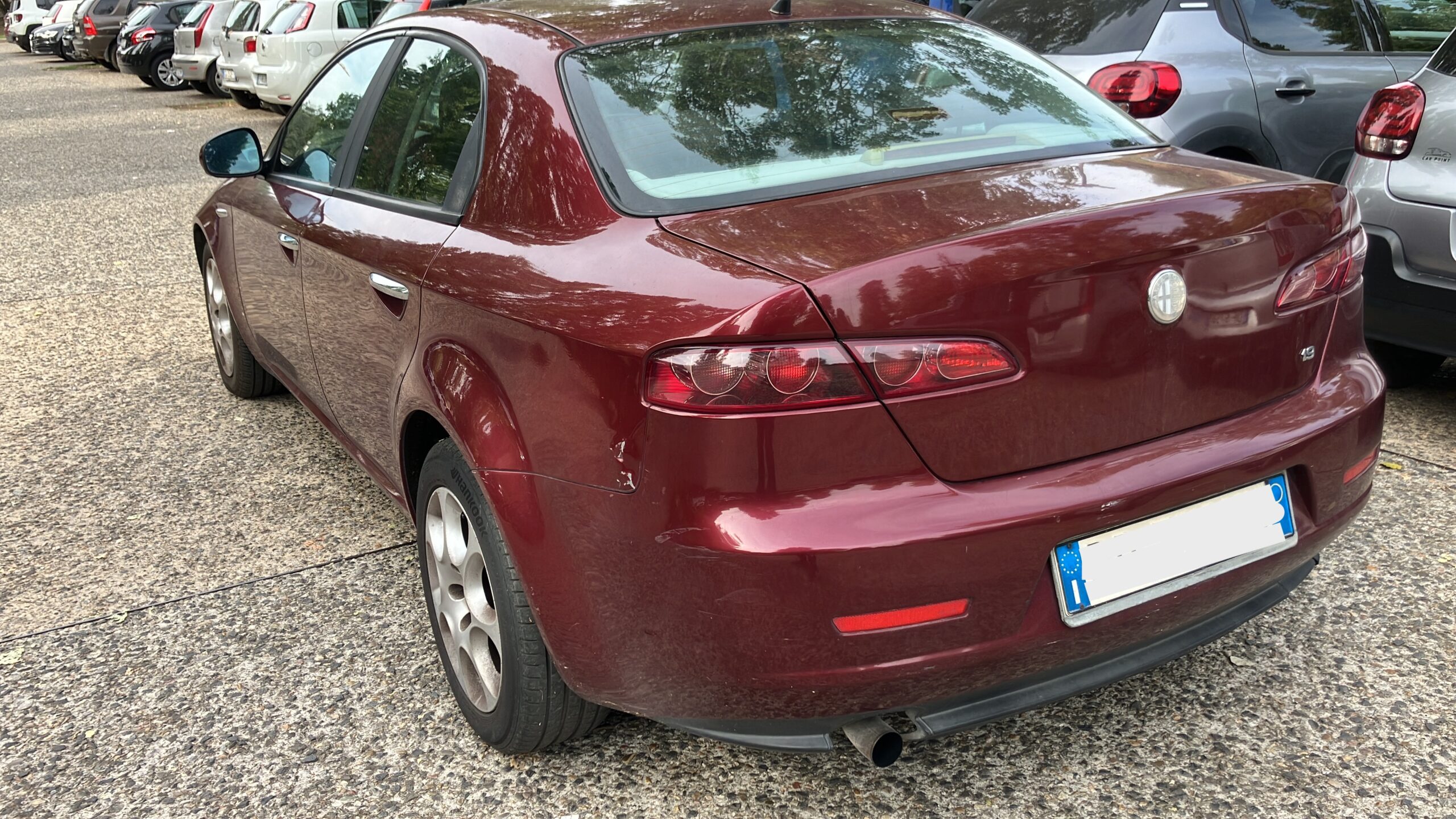
Well, my current, heavy (?) 150cv Alfa 159 has a weight/power ratio of 9.4 kg/cv; my old Alfa 156 Sportwagon had 11.8. That’s quite a bit higher, but if we factor in the remapping, my 159 should be around 8.3 kg/cv – so much for it being heavy. If I’m remembering correctly, the 156 was quicker off the mark – though it did have less inertia to contend with – but at speed, the 159 is smooth and really delivers.
And yet… the engine is built to last, but it’s a Euro 4 diesel, so it’s subject to a lot of restrictions (I’m not interested in driving it in town – it’s neither suitable nor do I enjoy doing so – but this could cause problems). And, above all, diesel prices have soared significantly and there’s no telling where they’ll end up, given that the fuel is also being targeted by legislators and is now subject to a higher tax, making it more expensive than petrol. I bought the 159 when diesel was around 1.4 euros a litre; today it costs almost 1 euro more, and no one would ever have imagined that possible. By now, many manufacturers have stopped producing cars with diesel engines, and the complicated maintenance of such an ageing engine has started to worry me. So I started thinking. I see LPG still well below one euro. In some cases, it’s just over 0.7 euros, not far off the ‘old days’. For some reason, LPG hasn’t seen the same price rises as other fuels. And I’d heard a lot of good things about the LPG Giulietta from a few years back. I did some calculations and realised that with the savings from the difference in fuel prices, I could have covered the monthly instalment for buying an LPG Giulietta. So I eventually got round to putting up an advert to sell the 159.
I’d recently been given a brand-new company car – small but feisty, yet packed with tech, alerts and notifications. I’m baffled by the large screen that all new cars come fitted with (especially as it’s showcased in adverts as a key feature when evaluating a car): you can’t touch your mobile, but you can touch the screen! How does that work? In short, like all new cars, it ‘doesn’t mind its own business’ – it helps you, advises you, alerts you, tells you off and… almost drives itself. We’ll lose the ability to drive – at least to drive as skillfully as we used to. But the fact that this one was brand new (and not too bad to drive once you’d switched off all the alerts) made me long for a newer Alfa.
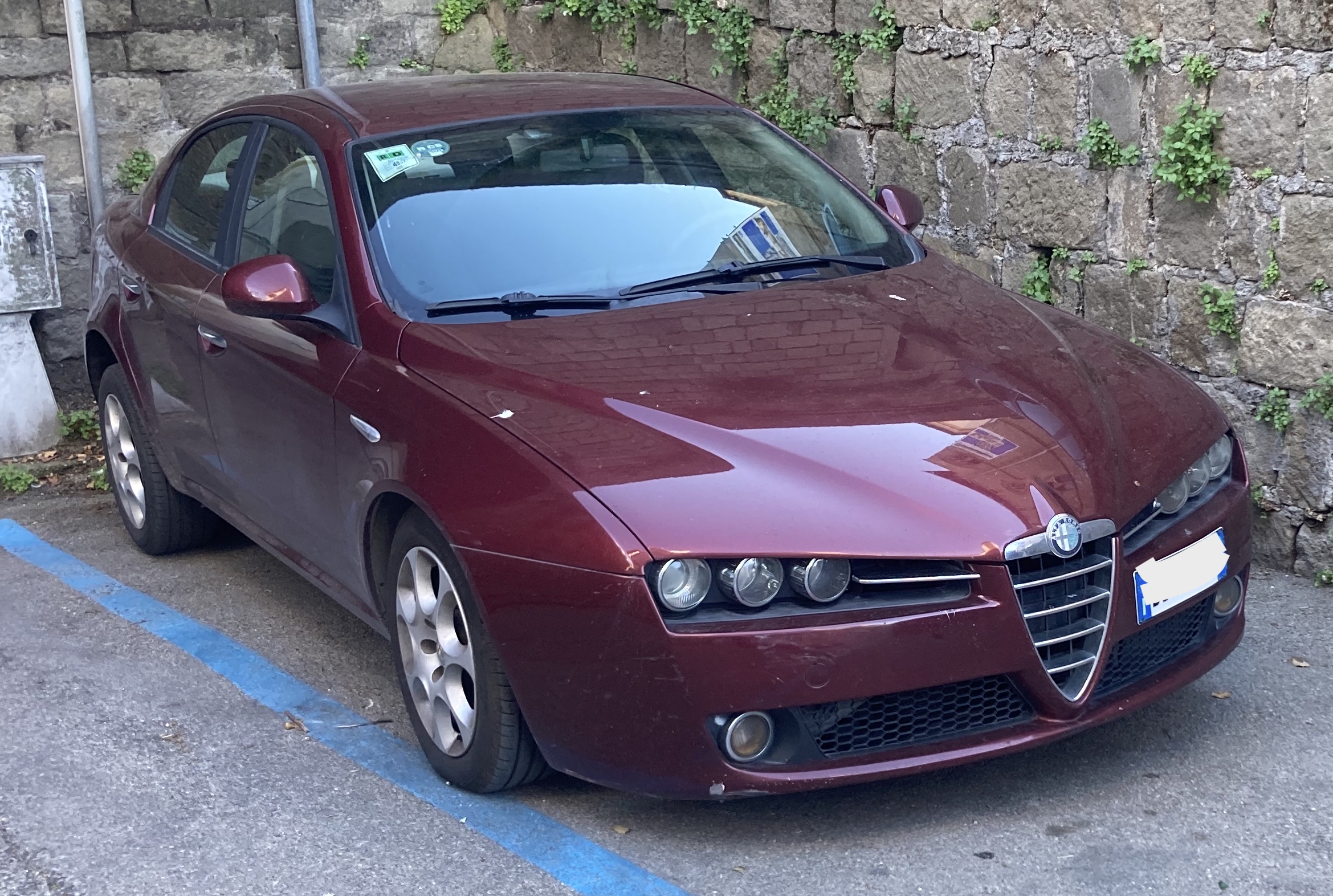
I went to a dealership and got behind the wheel of a Tonale, a Junior and a Stelvio. It didn’t feel too bad, but I still don’t like SUVs at the moment and I continue to prefer saloons, estate cars and hatchbacks. I simply can’t afford a new Alfa Romeo, not even a second-hand one. But the idea of a Giulietta running on LPG seemed appealing. But then, at one point, someone interested in my advert selling the 159 asked me for more photos – and that’s when the discomfort began…
This made me question my reasoning about saving money on LPG, which I’d have used to pay the instalments on the Giulietta. I would still have ended up with a car of a certain age and mileage. All it takes is one unexpected event and it’s all over. Or prices might change – LPG goes up and/or diesel goes down – and the whole argument falls apart. And who can predict that? So if I’m going to take a risk, it’s perhaps better to stick with what I know best: an older but well-maintained car, rather than a newer one where you don’t really know how it’s been looked after. My 159 has already had the maintenance work carried out that’s required for long-term reliability, such as the EGR and the swirl valves. In short, I’ve taken the advert down and my spirits are back up. My son’s very happy about it too; he really likes the Red Devil, and if it’s even called ‘Papalfa 2.0’, it’s also down to him… 😉
The 159 was meticulously looked after by the previous owner, who ran a mechanical workshop. I carry out all the scheduled servicing, but I can’t afford to do everything he used to do. And then I have to park it on the road, and that’s where the problems start. The car has sustained several parking scratches, and the bonnet was already pitted with stone chips from driving at high speed. There was a small dent when I bought it, at the rear of the left-hand side. The two bumpers have the most damage, mostly scrapes. The front bumper also has marks from scrapes on the underside (the sports suspension means it often scrapes the ground; in fact, I’ve even lost the bottom cover). All these imperfections have made me rule out the idea of registering the Alfa 159 as a classic car, given that it has only just turned 20. I’d pay half the road tax and get reduced insurance premiums, but there’s still an annual membership fee for the association and mileage limits for classic car insurance. So if I also have to spend money on cosmetic repairs, it’s not worth it.
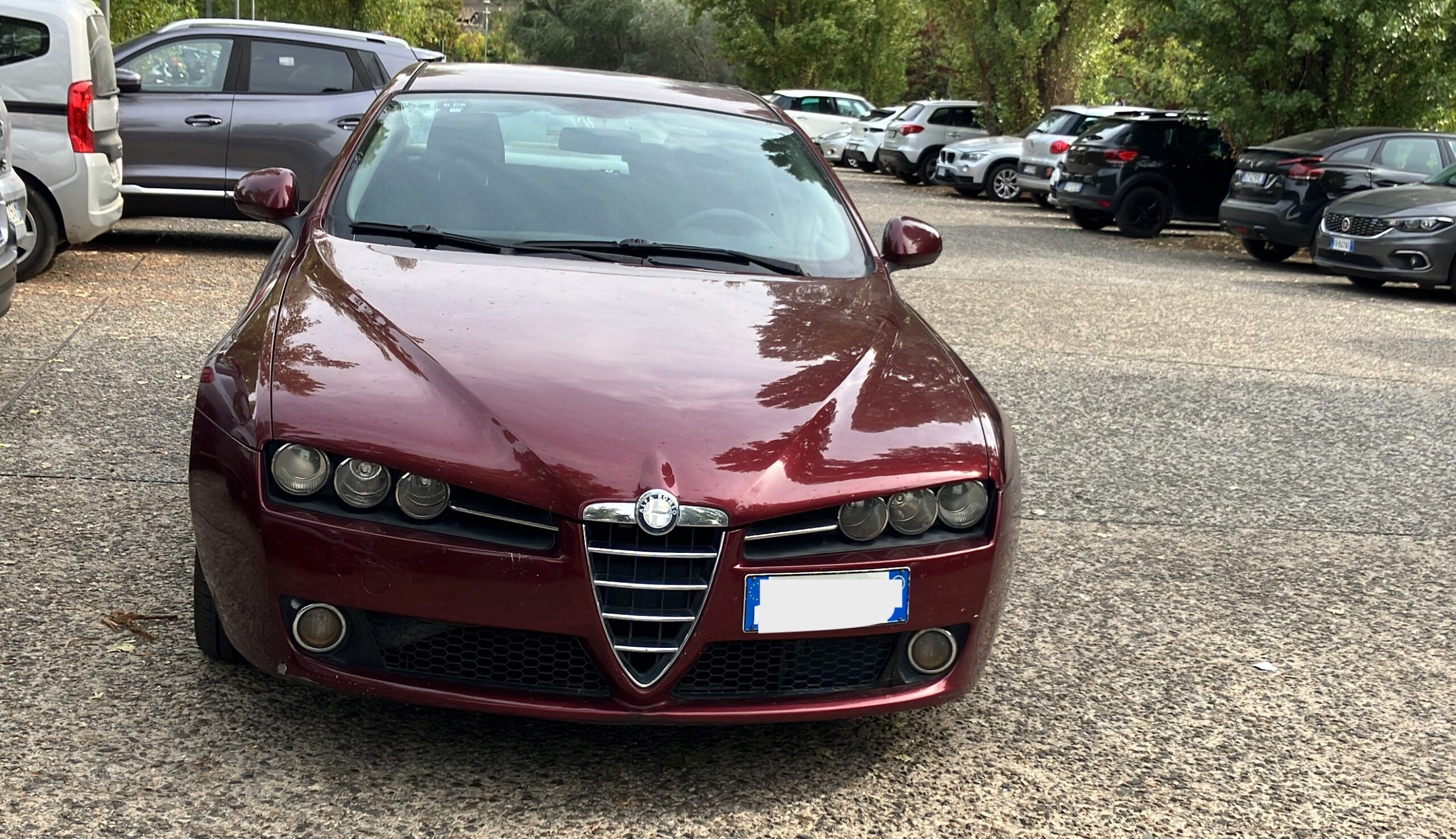
It’s a different story when it comes to mechanical problems. After a close encounter with a wild boar (which I managed to swerve but still hit sideways) I gradually realised that the damage wasn’t just cosmetic, albeit minimal: the front end started making quite a lot of noise, and the suspension squeaked at the slightest movement. At one point I felt the steering wheel vibrating and – alas – I pulled into the nearest garage, thinking I’d get away with just a wheel alignment. Instead, the front tyres were worn through on the inside, exposing the steel thread. What’s more, they pointed out that the shock absorbers had ‘reached the end of their life’ and one of them was leaking oil. They gave me the usual good deal, so I had the tyres (Hankook Ventus Prime) and front shock absorbers (Monroe) replaced.
The noises hadn’t gone away, but then I started to worry about the clutch slipping – at first only in very low gears, then even in third. It was time for a new clutch, and the mileage justified it. This time I turned to my trusted mechanic. Obviously, I got a good price, but it was still a considerable outlay. And unfortunately, whilst carrying out the clutch work, the mechanics noticed the condition of the front suspension, which absolutely had to be sorted out – driving in those conditions would have been dangerous. So, another job at a reasonable price: replacement of the upper control arms and their silent blocks. But whilst carrying out the work (returning to the ‘alas’ of the previous paragraph), they obviously noticed the new shock absorbers and, above all, that they had been fitted incorrectly (not centred, particularly one of the two). I’d also noticed something odd when I opened the bonnet, but I hadn’t mentioned anything to my mechanic. They refitted the shock absorbers correctly, and with the front suspension repaired, it felt like driving a brand-new car. They advised me to give them a ring from now on, even for things that seem trivial. At least they’re honest (they claim they’ve never had to replace shock absorbers on an Alfa 159, but if one breaks, fair enough – you can’t really know for sure anymore). I certainly won’t be going back to the place where they replaced them. And I got the other two new tyres from my trusted mechanic – two excellent Pirelli P7s.
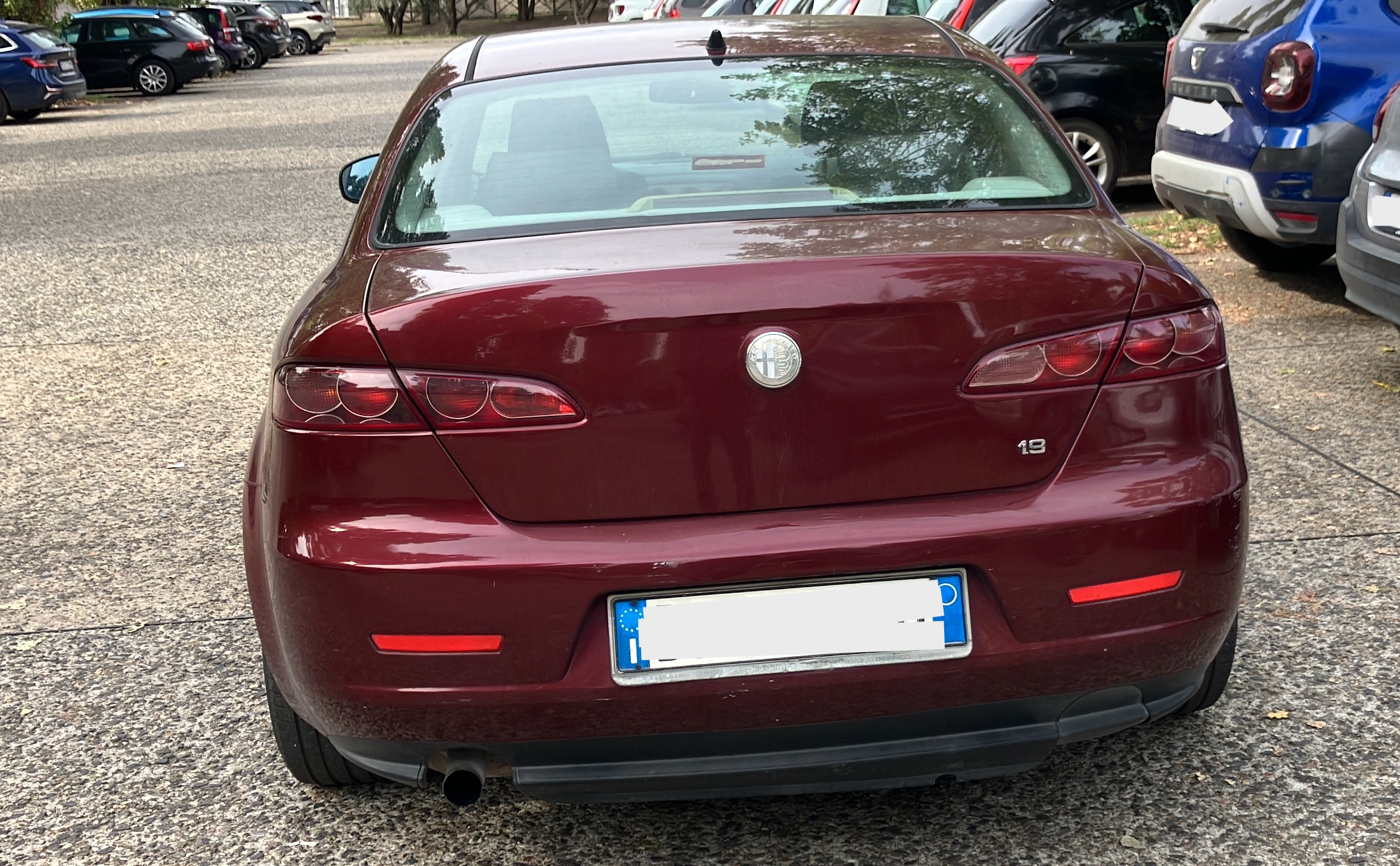
In short, these are all the sort of repairs you’d expect from a 20-year-old car. Next year it’ll be the turn of the timing belt. Then there’s the big unknown of the expensive turbo. It’s held up so far, but who knows… The steering can also cause problems on this model. There have even been recalls to have the power-steering fluid reservoir and the fluid itself replaced. The Alfa 159 originally used a red fluid, up until 2008, when it was replaced with a green fluid (which is considerably more expensive and was already used by several German makes), along with a new reservoir, the only difference being that the inlets for the hoses have a slightly larger diameter. I’d recently started hearing some noises whilst manoeuvring. Perhaps it was down to the tyres being a bit under-inflated; in fact, once I’d topped them up, things improved, but then a sound emerged – almost a growl – which they say is typical of a power steering system in trouble. I feared the worst – the costly replacement of the steering box, which is quite expensive on Alfa 159s anyway. Then I realised I’d been checking the fluid level in the wrong reservoir: the power steering reservoir was actually very low. This time I rang my mechanic and sent him a recording of the noise. He advised me to top it up without any worries. I used the original red fluid because the previous owner had given me a full list of all the work carried out, and the power steering reservoir wasn’t on it. Topping it up sorted the problem, and the steering is now quiet and smooth again.
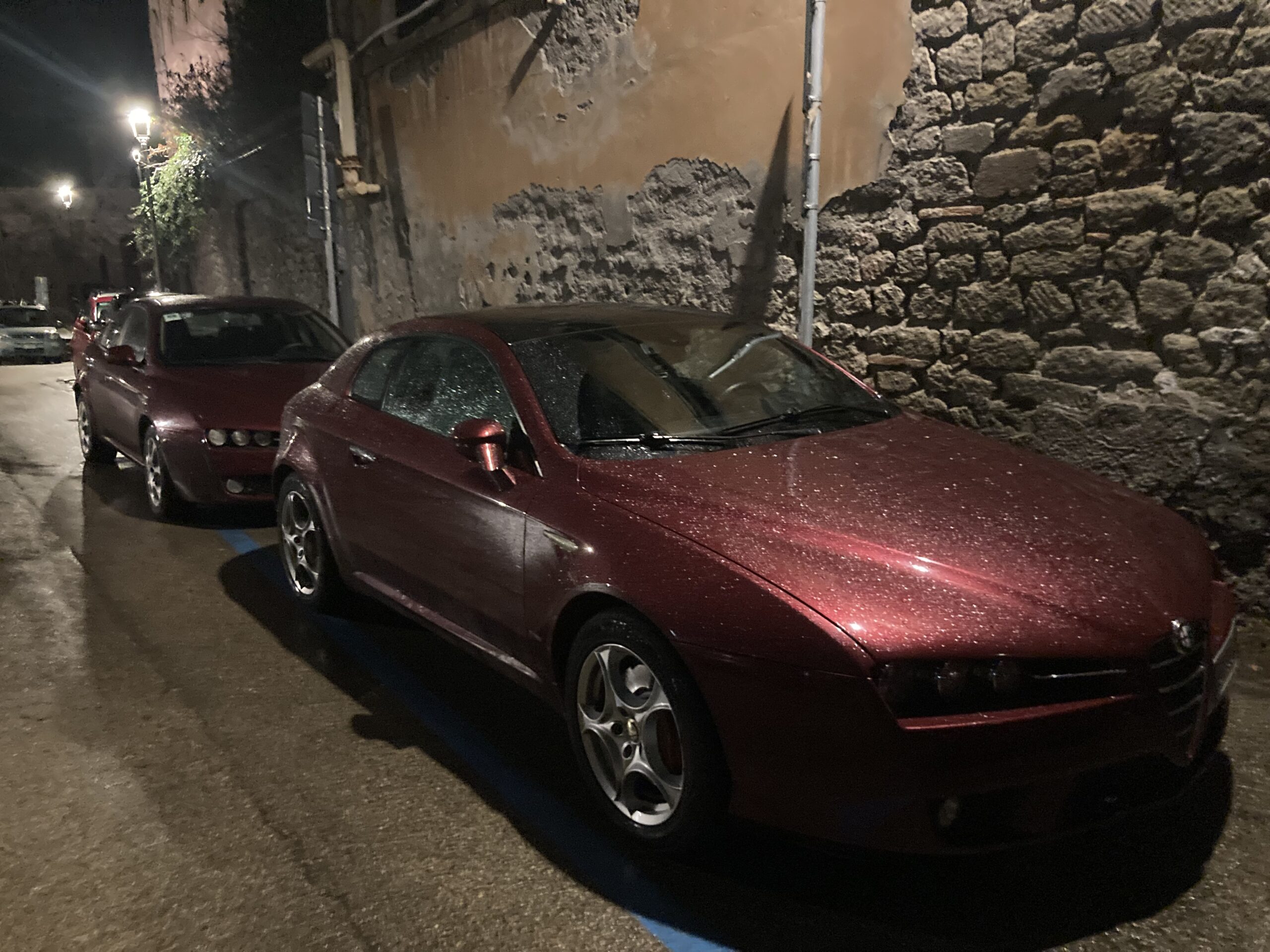 One evening I came home and found a parking space right behind a Brera that was identical to my 159… Giugiaro’s design really stands the test of time…
The feeling of having sorted it out myself by topping up the fluid and off I went was very satisfying. I’d like to see a modern car like the company car I’ve now been assigned: with all the electronics and computer systems on board, I don’t think a minor problem could be sorted out so easily on your own. That, too, is part of the pleasure of driving a classic car. It may well be quite a few years old, but it was a great car in its day and still is today. Few modern cars can compete, to begin with Giugiaro’s design, which seems untouched by the passage of time…